How Seismic Bracing Systems Are Compared in Real Project Bidding
Understanding the real evaluation criteria behind supplier selection in seismic fire protection systems
1. Introduction
In seismic regions, fire protection systems require properly designed seismic bracing to reduce the risk of damage during earthquakes.
While design standards such as FM provide the technical framework for compliance, the process of selecting a seismic bracing system in real projects involves additional considerations.
In practice, engineers and contractors must compare multiple suppliers and determine which solution is most suitable for the project.
This comparison is rarely based on a single parameter.
Instead, it involves a combination of performance data, applicability, and practical implementation factors.
2. The gap between compliance and selection
From a standards perspective, seismic bracing systems either meet requirements or they do not.
However, in project bidding, multiple products may all meet the same standard.
This creates a different type of decision problem:
If several options are compliant, how should one be selected?
To answer this, engineers evaluate how each system performs under real project conditions.
3. Load capacity as a primary comparison parameter
Load capacity is often one of the first parameters compared during supplier evaluation.
In seismic bracing systems, this value reflects the ability of the brace to sustain forces generated by seismic loading.
From a design perspective, higher load capacity can influence:
the number of required braces
spacing between restraint points
adaptability to higher seismic demands
This means load capacity is not only a performance indicator, but also a factor that affects overall system design efficiency.
4. System applicability across project scope
Projects typically involve a wide range of piping conditions.
These may include variations in:
pipe diameters
layout configurations
structural interfaces
If a seismic bracing system cannot accommodate the full range of project conditions, engineers may need to introduce additional products or modify the design approach.
This increases complexity in both design and installation.
For this reason, engineers often favor systems that provide consistent applicability across the project, reducing the need for multiple solutions.
5. Installation feasibility in real construction environments
Design drawings represent ideal conditions, but actual construction environments often introduce constraints that affect installation.
These constraints may include:
limited space for brace placement
interference with other building systems
structural limitations at connection points
Seismic bracing systems must be able to adapt to these conditions without compromising compliance.
If installation flexibility is limited, the risk of design adjustments during construction increases.
This can lead to delays, rework, or inconsistencies in system performance.
6. Engineering support as a decision factor
Beyond product specifications, engineering support plays a significant role in supplier evaluation.
In seismic bracing projects, engineers may require:
assistance with layout design
clarification of design parameters
support during design changes
Suppliers that provide structured engineering support can help reduce uncertainty and improve project efficiency.
This is particularly important in projects with complex layouts or strict compliance requirements.
7. How these factors interact in real bidding scenarios
In practice, engineers do not evaluate these factors independently.
Instead, they consider how they interact:
load capacity affects design flexibility
system applicability affects project consistency
installation feasibility affects execution risk
engineering support affects project efficiency
The preferred solution is typically the one that performs well across all of these dimensions.
8. Hoogo’s approach to project-oriented seismic bracing
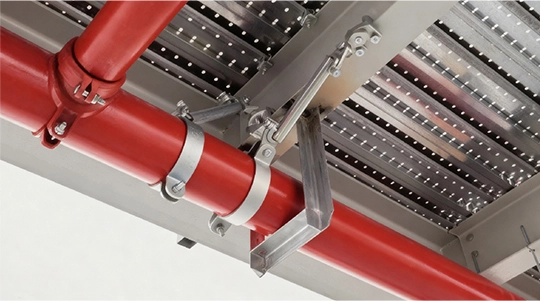
Hoogo’s FM Approved Seismic Bracing System is developed with a focus on real project requirements rather than isolated product metrics.
The system is designed to provide:
high load capacity for effective seismic restraint
broad applicability across pipe sizes
flexible installation configurations
engineering tools that support FM-based design
This approach allows engineers to work with a solution that supports both compliance and practical implementation.
9. Conclusion
Selecting a seismic bracing system in real projects involves more than verifying compliance with standards.
Engineers must evaluate how each system performs in terms of capacity, applicability, installation, and support.
Understanding these factors helps ensure that the selected solution is not only technically compliant, but also suitable for real-world conditions.
For further technical discussion or project collaboration, Hoogo welcomes inquiries from professionals in fire protection and seismic engineering.
? WhatsApp: +86 184 5226 4005
✉️ Email: info@szhoogo.com
Related Products
FM Approved Roof-Mounting PV Module Systems
FM Approved Seismic Bracing Systems