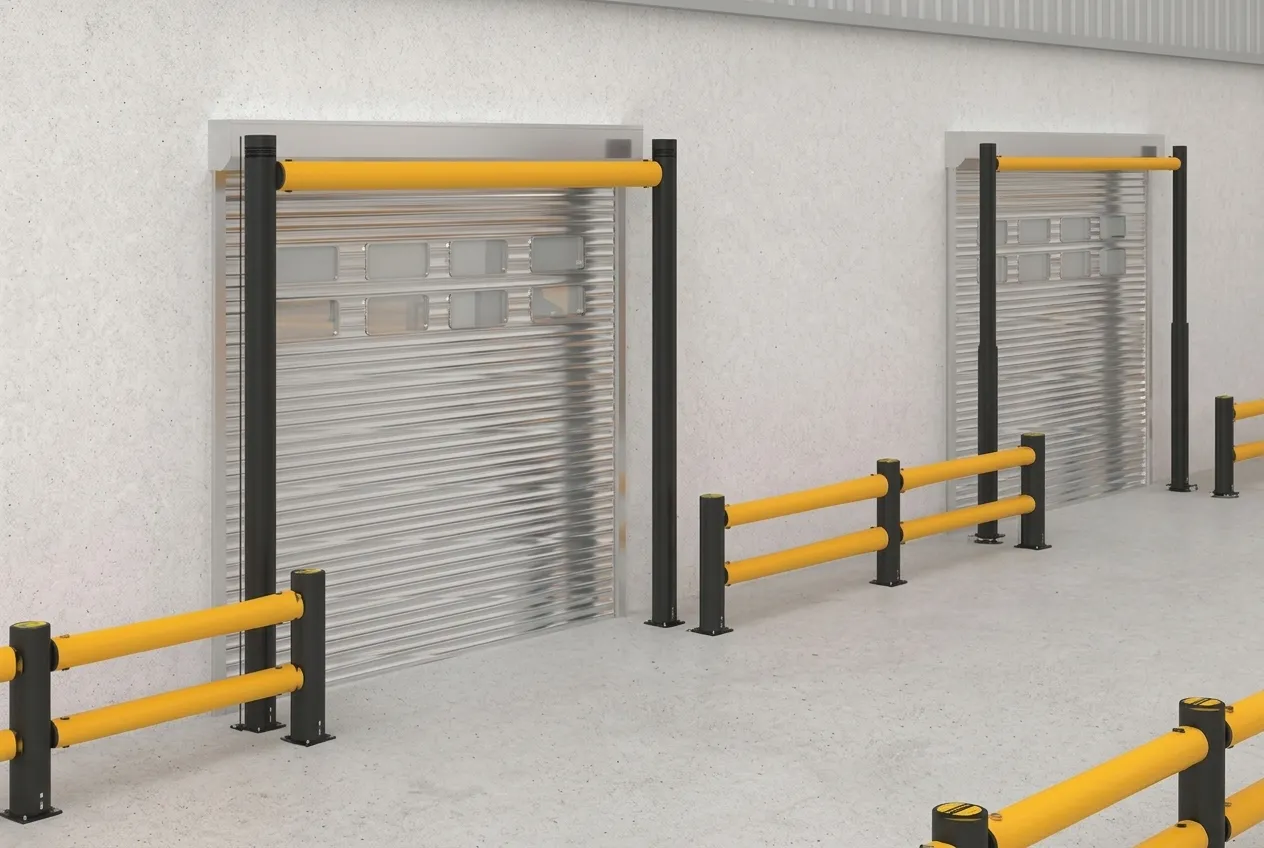
What is PAS13:2017, and Why Does Your Warehouse Need TUV-Certified Barriers?
As industrial facilities move away from rigid steel, the market has been flooded with various types of plastic and polymer guardrails. For an EHS director or facility manager, they all look remarkably similar on a website or catalog: they are bright yellow, modular, and promise to protect your workplace.
However, many procurement teams are learning a painful lesson after a purchasing decision is made: a forklift clips a newly installed "plastic" barrier, and instead of flexing, the rail shatters into brittle fragments.
The market contains a significant number of unverified, substandard products that mimic the appearance of advanced industrial polymers but lack the molecular engineering to withstand real-world impacts. When a barrier fails catastrophically, it isn't just a loss of materials; it represents a complete breakdown of your workplace safety protocols.
To avoid these liabilities, global procurement standards rely on two critical verification benchmarks: the British Standard PAS13:2017 and independent TUV NORD certification
Understanding PAS13:2017: The Industry Testing Benchmark
You cannot manage what you do not measure. For many years, industrial barrier manufacturing lacked a standardized testing methodology. A manufacturer could claim their product was "heavy-duty" without ever subjecting it to a controlled, repeatable crash test.
This changed with the introduction of PAS13:2017 (Publicly Available Specification), a rigorous testing framework developed to standardize the selection and testing of industrial safety barriers.
Unlike self-proclaimed specifications, PAS13:2017 defines exactly how a barrier must be tested:
It outlines the precise vehicle mass, impact speeds, and angles required during physical testing.
It standardizes how dynamic impact energy is calculated and recorded.
It ensures that the barrier's performance characteristics are verified under realistic warehouse traffic conditions, rather than idealized laboratory setups.
By adhering to PAS13:2017, the guesswork is removed
Decoding the Technical Metrics: What is a Joule (J)?
When reviewing a certified safety barrier's specification sheet, the most critical engineering metric to look for is the Impact Energy Absorption Rating, which is always measured in Joules (J)
A Joule is a standard unit of kinetic energy. In a warehouse setting, the kinetic energy generated during a collision depends entirely on two variables: the total mass of the forklift (including its payload) and the velocity at which it is traveling. The calculation follows a standard physical relationship:
Because velocity is squared, even a minor increase in forklift speed causes a massive surge in impact energy.
Substandard "Plastic" Barriers: Frequently fail to provide verified Joule ratings. Under sudden stress, the material reaches its ultimate tensile limit instantly, resulting in a brittle fracture that offers zero protection.
HOOGO TUV-Certified Barriers: Engineered using advanced polymer chemistry designed specifically to manage high-Joule impacts. When struck, the molecular structure dynamically deflects to absorb the kinetic energy, transferring minimal stress to the foundation before restoring itself to its original shape.
How to Audit a Manufacturer’s Certification Report
When a safety supplier claims their product is "TUV-certified" or "PAS13-compliant," your compliance team should always request the formal, third-party verification report issued by an independent authority like TUV NORD.
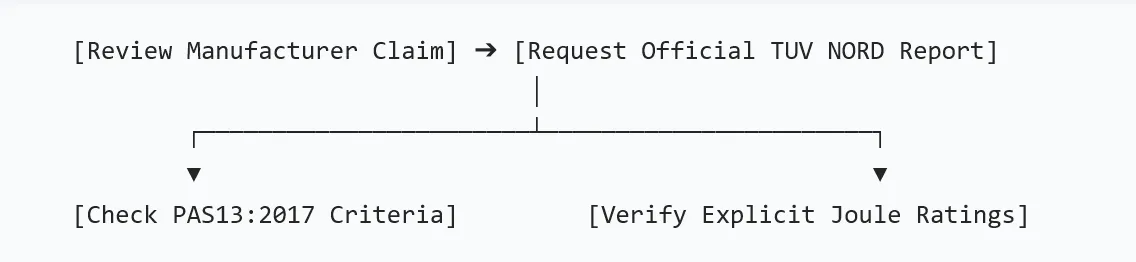
When reviewing the documentation, ensure it satisfies three core criteria:
Independent Verification: The document must be issued directly by a recognized third-party testing house (such as TUV NORD), proving that the tests were monitored and audited by objective engineering experts.
Explicit Joule Ratings: The report must clearly state the maximum impact energy (in Joules) the barrier successfully absorbed without structural failure or anchor failure.
Elastic Recovery Confirmation: Verify that the report notes the material’s ability to return to its original form, ensuring long-term continuous protection.
If a supplier cannot or will not provide an official, audited certificate matching these parameters, they are exposing your operation to significant risk.
Aligning with Global Compliance Leaders
In high-stakes industrial environments, safety compliance cannot be compromised. This commitment to verified, certified protection is why top-tier global companies with highly scrutinized EHS guidelines specify TUV-certified polymer barriers for their infrastructure.
Enterprises such as Tesla Gigafactory Shanghai, NIO Automobile, BYD, GLP (ProLogis), and AS Watson Group utilize these systems because they require validated performance data to protect their personnel and high-value logistics assets. For these industry leaders, choosing a certified flexible barrier system is a vital component of their strategy to achieve true cost reduction and efficiency enhancement across their supply chain.
Summary
Don’t risk your facility's safety on unverified "plastic" alternatives that lack certified structural integrity. By ensuring your guardrails are fully compliant with PAS13:2017 and independently verified by TUV NORD, you protect your warehouse floor, secure your material handling equipment, and establish a verifiable standard of workplace protection.
Related Products
FM Approved Seismic Bracing Systems
ETA Certified Anchor Fixing System